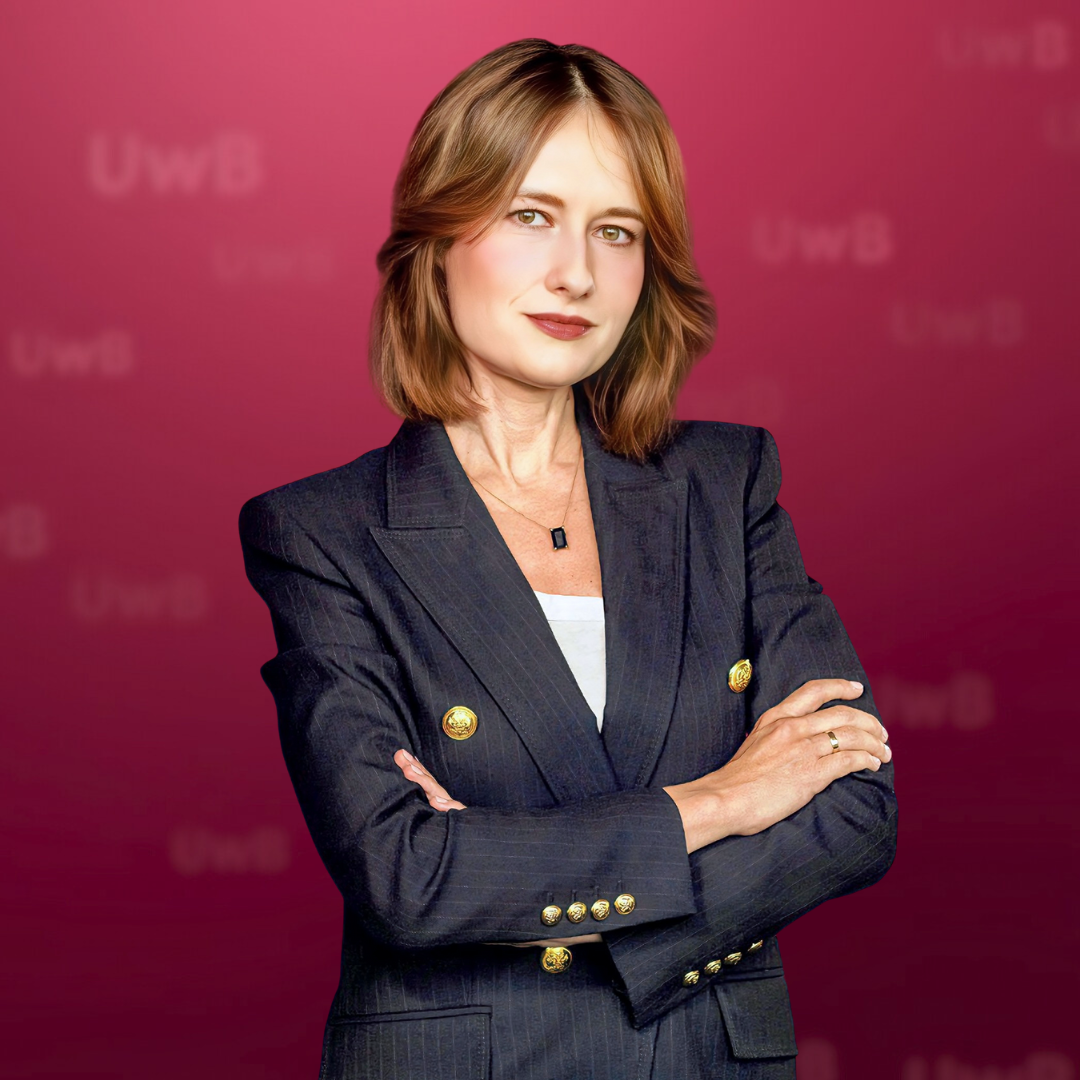
Conference Chair
Faculty of Education,
University of Białystok
Interview with Assoc. Prof. Marta Kowalczuk-Walędziak, Chair of the Organising Committee of the ATEE 2026 Annual Conference in Białystok.
The theme emerged from a very real tension we experience every day in teacher education – between the local and the global, between tradition and innovation, between what education systems demand and what teachers and students actually need. At its core, the conference addresses a dual challenge: on the one hand, teacher education as a means of responding to the complexities of our increasingly interconnected global landscape, and on the other hand, teacher education as a field that is itself enriched by breaking down barriers – between disciplines, between actors, between theory and practice. We live in a time when borders are more visible and more contested than ever, and, as a training ground for the educators of the future, teacher education has a duty to navigate this tension.
We are thinking about borders in the broadest possible sense, and the conference programme reflects this very intentionally. There are geographical borders: teacher education often operates within national frameworks, shaped by government policies, cultural values, and pedagogical traditions. However, we want to explore what happens when we transcend those frameworks, fostering cross-border collaboration, and building truly interconnected classrooms.
Then there are disciplinary borders. Teacher education intersects with psychology, law, history, sociology, and so many other fields. We want to champion inter- and multi-disciplinary approaches to preparing teachers for their profession.
We are also thinking about institutional borders – the silos that so often separate universities, schools, policymakers, and other stakeholders. Breaking these borders down, creating genuine partnerships and communities of practice, is essential if teacher education is to be aligned with what is really needed in today’s classrooms.
Cultural borders matter enormously too. Contemporary teachers are navigating increasingly diverse cultural contexts every single day. Empowering them – through initial education and continuous professional development – to foster inclusivity, equity and understanding is one of the most pressing tasks we face.
And then there are personal and professional borders – the invitation to push the boundaries of traditional roles, pedagogies, and mindsets. Innovative pedagogies, new routes into the profession, new methods of professional development: all of this is very much part of our conversation.
Finally, and perhaps most intriguingly, we want to explore temporal borders. We tend to think of time as linear – past, present, future in neat succession. But teacher education stands to gain enormously from less linear perspectives: looking back to understand what has worked, building critically on existing good practices, and imagining futures that are not simply extensions of the present.
On the eastern edge of our continent, the Russian invasion of Ukraine has made the question of borders devastatingly real for millions of people, including teachers and students. Many Ukrainian children are now in Polish, German, Czech, and other European classrooms. Their teachers – and the teaching assistants working alongside them – face challenges that no curriculum fully prepares you for. At the same time, we see a troubling resurgence of nationalism and exclusion in many parts of Europe. Teacher education has a responsibility to respond, preparing educators who are not just technically competent, but who are genuinely committed to democratic values, inclusion, and human dignity.
So this is not just an abstract or academic theme. It is urgent.
It means a great deal to us. The ATEE has been building bridges between teacher educators across the continent for half a century – that is a remarkable achievement! The anniversary makes the conference extra special. We want to look back at what has been accomplished, but more importantly, we want to look forward. What does teacher education in Europe need to become in the next fifty years? What borders do we still need to cross together?
Hosting this anniversary conference in Białystok is both a great honour and a great responsibility. We want to create an event truly worthy of that moment – and the temporal dimension of the theme feels very fitting for an anniversary year.
We are designing a programme that reflects the theme in its structure as well as its content. There will be keynote addresses from leading international scholars, but also workshops, roundtables, and collaborative sessions that genuinely bring people together across national and disciplinary lines. We want to create space for early career researchers and doctoral students – crossing borders means welcoming new voices into the conversation.
We are also particularly proud of the cultural programme. Białystok and the Podlaskie region have so much to offer in terms of multicultural heritage, art, music, and landscape. Historically, this city has been a meeting point and melting pot of Polish, Belarusian, Ukrainian, Lithuanian, and Jewish traditions – aligning with the conference theme in a very profound way. We want participants to experience the richness of this beautiful place, not just the inside of our conference hall!
Because teacher education matters – perhaps more now than it ever has. Because the questions we are asking are not comfortable ones, and they deserve serious, generous, international conversation. And because Białystok will surprise you. It is a city with a layered, complex, beautiful history – a city that has survived so much and still has so much to offer. Come and cross a border. You may not want to go back.
Dive deeper into the concept of "Crossing borders with and in teacher education".
 Governor of the Podlaskie Voivodeship
 Marshal of the Podlaskie Voivodeship
 Mayor of Białystok
 Rector of the University of Białystok
 City of Białystok
 The Sybir Memorial Museum
 AFS Poland
 WorldLINK Foundation
 Centre for Research on National and Ethnic Minorities at the University of Białystok
 Echo360
As part of our website, we use cookies stored on the user's device in order to adapt the behavior of the website to the individual preferences of the user and for statistical purposes. The user has the option to change the cookie settings in their web browser. More information can be found in the Privacy Policy. By using the website, you consent to the use of cookies, in accordance with the browser settings.