

Leading voices in teacher education
We are honored to welcome distinguished scholars from across the globe. Please scroll down to meet the experts who will be shaping the discourse of ATEE 2026 through their groundbreaking research and visionary perspectives.
Keynote programme
Select a speaker below to view their lecture title, abstract, biography and references.
Keynote lecture
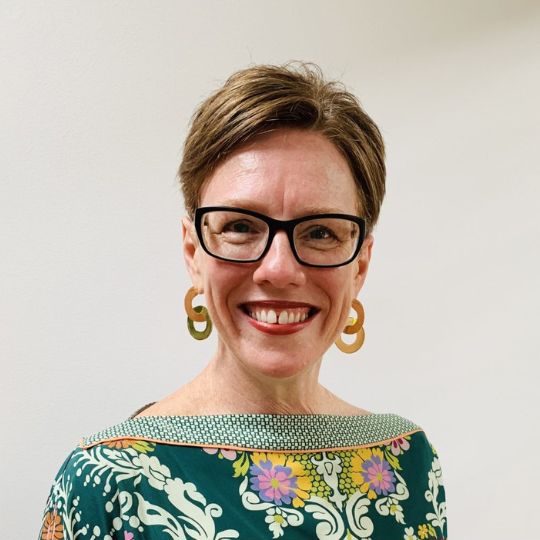
Nicole Mockler, The University of Sydney
Nicole Mockler is Professor of Education at the Sydney School of Education and Social Work, University of Sydney, and Honorary Research Fellow at the Department of Education, University of Oxford. She is currently President Elect of the Australian Association for Research in Education.
Her research focuses on teachers’ work and professional learning, education policy and politics, as well as curriculum and pedagogy. Her recent books include Constructing Teacher Identities: How the Print Media Define and Represent Teachers and their Work (2022) and the co-edited BERA-Sage Handbook of Research-informed Education Practice and Policy (2025).
Nicole served as Editor-in-Chief of The Australian Educational Researcher from 2017 to 2022 and sits on the Editorial Boards of five scholarly journals. In 2022, she was awarded the Australian Council for Educational Leadership Dr Paul Brock Memorial Medal for significant career-long impact on the field of education.
Further details can be found on her University profile page .
The poem Utopia, by Polish Nobel Laureate Wisława Szymborska (1976), describes an island of certainty where nothing is ambiguous; a place that nobody inhabits. It is a fitting metaphor for the vision of teacher education that has come to dominate policy across diverse national contexts: risk-free, guaranteed in its outcomes, stripped of the complexity that makes teaching genuinely educational.
Drawing on Carol Bacchi's critical question, ‘what’s the problem represented to be?’ (Bacchi & Goodwin, 2025), this keynote examines contemporary teacher education reform across a range of global contexts. It argues that regardless of national setting or political complexion, teacher education tends to be constructed as the same problem and subjected to the same solutions: more standardisation, more prescription, more performative accountability. These representations do not simply describe the problem; they actively produce an impoverished version of teacher education, one less and less capable of forming teachers who are epistemologically grounded, attentive to the relational dimensions of teaching, and genuinely equipped for the complexities of practice.
The keynote holds this analysis in tension with two competing visions: UNESCO's (2021) call for a new social contract for education oriented toward democratic renewal and planetary futures, and Ball and Collet-Sabé's (2025) more radical provocation that the institution of schooling may itself be structurally incapable of realising such a vision. Between the aspiration and the critique lies the policy reality that this keynote documents: each wave of reform has foreclosed possibilities for professional judgement, intellectual formation and democratic purpose; possibilities that struggle to find voice within the dominant social imaginary, and whose loss represents an opportunity cost that grows with every new settlement.
The borders that matter most in teacher education are not geographical or institutional. They are made by policy, settlement by settlement, progressively narrowing what teacher education can be and, consequently, what teachers can become. Naming those borders, tracing their construction, and imagining what lies beyond: this is the work of crossing them. Without it, we will keep mistaking the island for a destination; and keep finding, reform by reform, that nobody can live there.
Keynote lecture
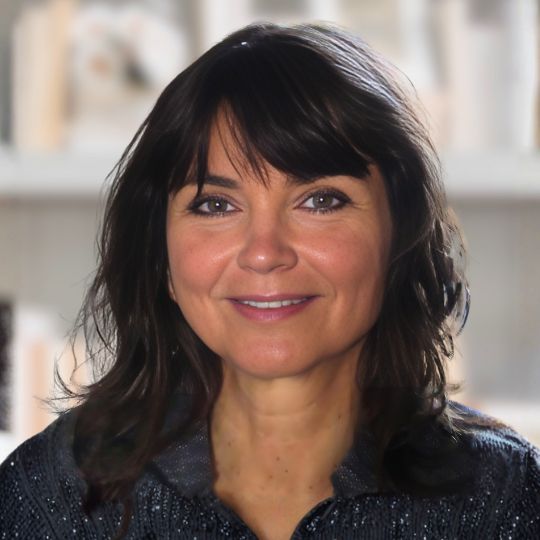
Michele Schweisfurth
Michele Schweisfurth is Professor of Comparative and International Education at the University of Glasgow in Scotland (Emerita from January 2026). Her main research interest is pedagogy, focusing on internationally travelling policies and notions of ‘best practice’. Among her publications on this subject are three monographs and over 20 articles and book chapters.
Originally from Canada, she has worked as a teacher, teacher educator, or adult educator in six different countries, and conducted research and consultancy in many others. Past roles include editor of the journal Comparative Education, President of BAICE (2023-24), Chair of Trustees of UKFIET, Senior Research Fellow with the Education team at the UK Foreign, Commonwealth and Development Office, and Director of the Centre for International Education and Research at the University of Birmingham.
Further details can be found on her University profile page .
Education in Europe and across the globe is at a crossroads, with the language of crisis perpetuating a sense of urgency. It is therefore timely to re-examine pedagogy comparatively and to situate it across different scales, from the global to the local, in order to learn from this border crossing. The global discourse of ‘disaster didacticism’ (Schweisfurth 2023) is generating universal prescriptions for classroom practice that promise to improve teachers’ work and pupils’ learning. However, pedagogy includes both the observable act of teaching and everything that shapes it (Alexander, 2001): pedagogy is therefore deeply embedded in its geographical, cultural, institution, disciplinary and digital contexts. This definition helps to explain why understandings of good teaching practice vary across cultures and scales, and why pedagogical norms have a life of their own beyond technocratic efforts to understand and impose ‘what works’. What is true for pedagogy is also true for pedagogical research.
This presentation will address some foundational issues about the relationship between pedagogy and education’s wider purpose. It will then present different ways of conceptualising practice, from the complexities of the ‘pedagogical nexus’ (Hufton & Elliott, 2010) to the apparently evidence-based ‘best practice’ prescriptions currently in vogue internationally. Finally, it will raise critical questions about the entrenched borders, divisions and misunderstandings found in research and planning on pedagogy (Schweisfurth 2025).
Keynote lecture
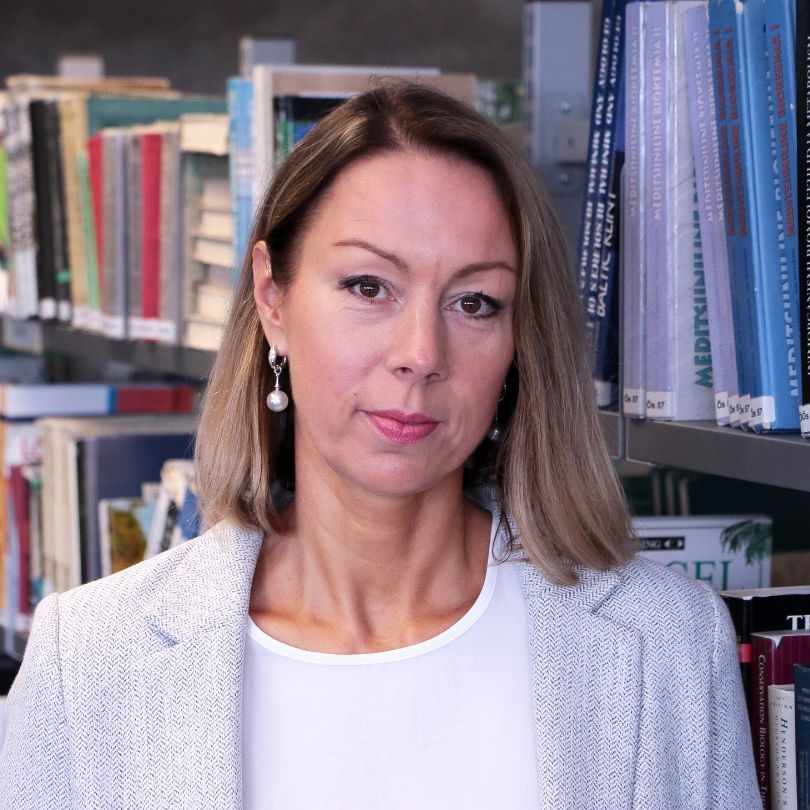
Katrin Poom-Valickis, Tallinn University, Estonia
Katrin Poom-Valickis is a Professor of Teacher Education at the Institute of Educational Sciences, Tallinn University. Her research focuses on teacher professional development, student teachers’ learning processes, and the factors shaping the development of professional identity.
She has led and contributed to national and international projects aimed at strengthening evidence-informed teacher education and enhancing the teaching profession. As an active voice in educational discourse, she collaborates with schools, policymakers, and international partners to bridge research and practice.
She has played a significant role in launching the induction year programme for novice teachers and in developing the Estonian Teacher Professional Standard. She has also been an advocate for strengthening teachers’ research competencies and integrating action research into teacher education as a means of fostering reflective, inquiry-based professional practice.
In times of growing societal and geopolitical uncertainty, becoming a teacher increasingly involves navigating borders—between institutions, knowledge traditions, expectations, and within oneself. This keynote frames teacher development as a professional journey shaped by continuous border crossing across personal, institutional, cultural, and temporal dimensions.
Drawing on Blömeke’s competence-as-continuum model, teacher competence is conceptualised as the dynamic transformation of dispositions into situation-specific skills and professional action. Such development is rarely linear. The capacity to notice, interpret, and make sound judgements in complex situations is often shaped and at times constrained by inner borders: beliefs, identity tensions, emotional responses, professional vulnerability, and unexamined assumptions. These internal boundaries influence how teachers engage with external borders between university and school, theory and practice, research and lived experience.
Research on teacher identity development, mentoring, school-university partnerships, and inquiry-oriented practice suggests that becoming a teacher is not merely about acquiring knowledge and skills, but about cultivating the capacity to remain open, reflective, and responsive in changing contexts. Such growth depends on supportive professional cultures and intentionally designed teacher education environments that foster self-awareness, ethical judgement, and an inquiry stance alongside situation-specific skills.
Border crossing thus emerges as a defining feature of the learning professional—someone who approaches uncertainty not as a threat, but as a space for inquiry and professional growth.
Keynote lecture
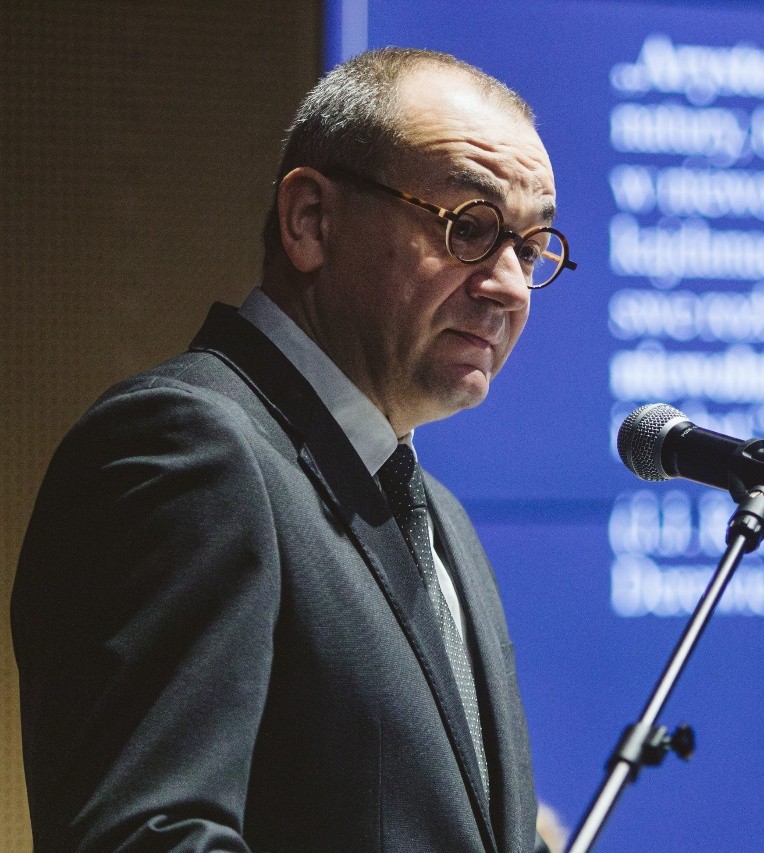
Piotr Zamojski, Polish Naval Academy
Piotr Zamojski is a professor of education at the Faculty of Humanities and Social Sciences of the Polish Naval Academy in Gdynia. His research concerns mainly educational theory and philosophy of education.
He has authored five books, including two written in collaboration with Naomi Hodgson and Joris Vlieghe (Manifesto for a Post-Critical Pedagogy, Punctum Books 2017), and with Joris Vlieghe (Towards an Ontology of Teaching. Thing-centered pedagogy, affirmation and love for the world, Springer 2019). The Manifesto for a Post-Critical Pedagogy sparked various debates in the field of educational theory.
Developing the post-critical perspective regarding education is the main focus of Zamojski’s current research. His last book, Education as a Public Thing (2022), reported on a decade-long participatory action research project on ‘building a public sphere around education in Poland’. Currently, he serves as a co-convener of the ECER Network 13 (Philosophy of Education).
In this contribution I turn to a border we all seem to find difficult to cross; border limiting our theoretical and ideological imaginary of education, and, with that, our capacities to value and care for various educational practices – teaching in particular. This border is difficult to cross, because it doesn’t refer to a geographical or disciplinary territory, neither to a cultural or institutional domain, rather it limits our educational thinking, imagining, and theorising. In other words, we deal with a limiting horizon, a hegemonic imaginary providing a naturalized logic assumed silently on all sides of the ideological spectrum in the public discourse concerning education, educational policies, as well as educational research. According to this imaginary education is a production process: a process that produces something, i.e. that ends with a designable results which can be grasped and measured. Such an understanding of education prioritises learning of other educational phenomena and practices (Biesta 2006; 2010), introduces the framework of efficiency and accountability (Ball 2007; Apple 2005), and – with that – intensifies bureaucratisation, as well as collapses into one the curriculum- (or teacher-) centred models and student-centred models under the banner of personalisation of learning (Simons & Masschelein 2021) which is focused on optimisation and efficiency. What follows is a particular image of teaching rendered in terms of a professionalised service that is technical in nature. The problem is that when conforming to this imaginary (which is to certain extent inevitable as it governs much of educational policies, institutions, and research), one quickly becomes aware that the logic of production is irreconcilable with one’s most fundamental experiences of teaching and being taught. Still, there seems to be a difficulty in going beyond the logic of production in thinking about education today. Being focused on producing learning outcomes via personalised environments and feedback loops executed in a professional manner there is hardly any space for thinking about the relational atmosphere of a classroom, the joy of teaching, sharing one’s love for the subject matter, or enacting free time (scholē). We encounter a limit in our thinking that makes us unable to speak of our true educational experiences.
Hence, following Heidegger’s (1968) concept of recollection, I propose turning to new theoretical articulations of teaching (Masschelein & Simons 2013; Korsgaard 2019; Vlieghe & Zamojski 2019) which – through Arendt’s (1961) understanding of education – offer a way to express and relate to these suppressed experiences of being a teacher which cannot be rendered in terms of producing learning outcomes. With that I form an invitation to cross this border and liberate our educational imagination.
Ready to dive deeper? Navigate through the sections below to find the daily schedule, read about our keynote speakers, explore workshop details, and see what cultural tours await you.
 Governor of the Podlaskie Voivodeship
 Marshal of the Podlaskie Voivodeship
 Mayor of Białystok
 Rector of the University of Białystok
 City of Białystok
 The Sybir Memorial Museum
 AFS Poland
 WorldLINK Foundation
 Centre for Research on National and Ethnic Minorities at the University of Białystok
 Echo360
As part of our website, we use cookies stored on the user's device in order to adapt the behavior of the website to the individual preferences of the user and for statistical purposes. The user has the option to change the cookie settings in their web browser. More information can be found in the Privacy Policy. By using the website, you consent to the use of cookies, in accordance with the browser settings.